GoblinOS Assistant
A multi-provider, privacy-first AI assistant with observable routing.
Overview
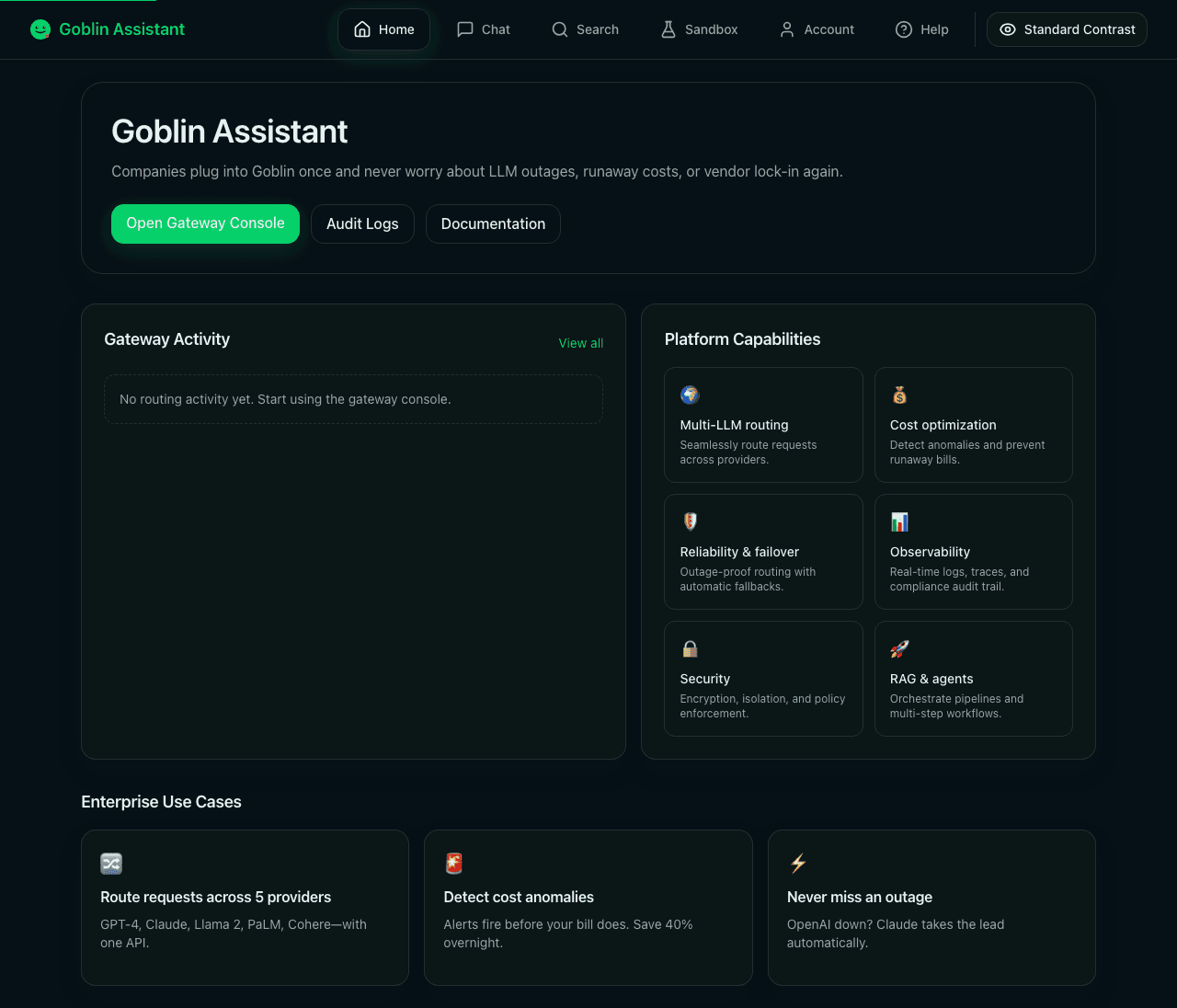
GoblinOS Assistant is a multi-provider, privacy-first AI assistant with intelligent model routing.
The interface pairs chat with live system status panels so you can see provider health, latency, and routing behavior at a glance. The backend is FastAPI (Python) with a SQL data layer, while the frontend is built in Next.js (React/TypeScript) with Tailwind CSS. Deployment uses Vercel for the UI with Cloudflare at the edge, and Docker + Terraform keep infrastructure repeatable.
Case Study
The Problem
Single-provider assistants are brittle and hard to control; this needed to be multi-provider, privacy-first, and observable.
Audience & Stakes
Developers and power users who want a controllable assistant with dependable routing and clear system status.
My Approach
Built a FastAPI backend with a Next.js UI, surfaced status panels alongside chat, and deployed with Vercel, Fly.io, and Cloudflare. Docker + Terraform keep environments repeatable.
Tradeoffs
Added routing and observability complexity for flexibility and privacy control, in exchange for more operational setup.
Impact
A production-ready foundation for a provider-agnostic assistant with transparent routing and cost visibility.
Key Features
- Chat interface paired with live system status panels
- Multi-provider routing with observable decision signals
- Workflow execution and orchestration tools
- Cost tracking and usage visibility by provider
- FastAPI backend with structured, typed API surface
- Next.js frontend in TypeScript with Tailwind CSS
- Cloudflare edge + Docker/Terraform infrastructure
Technical Challenges
- Keeping routing behavior explainable while supporting multiple providers
- Surfacing system status without overwhelming the core chat UX
- Maintaining a clean API contract between FastAPI and the UI
- Balancing privacy-first defaults with practical routing flexibility
Key Learnings
- Routing logic needs visibility (status panels) to be trustworthy
- Type-safe contracts reduce frontend/backend drift
- Cost visibility changes how routing rules are tuned
- Infra-as-code keeps deployments reproducible